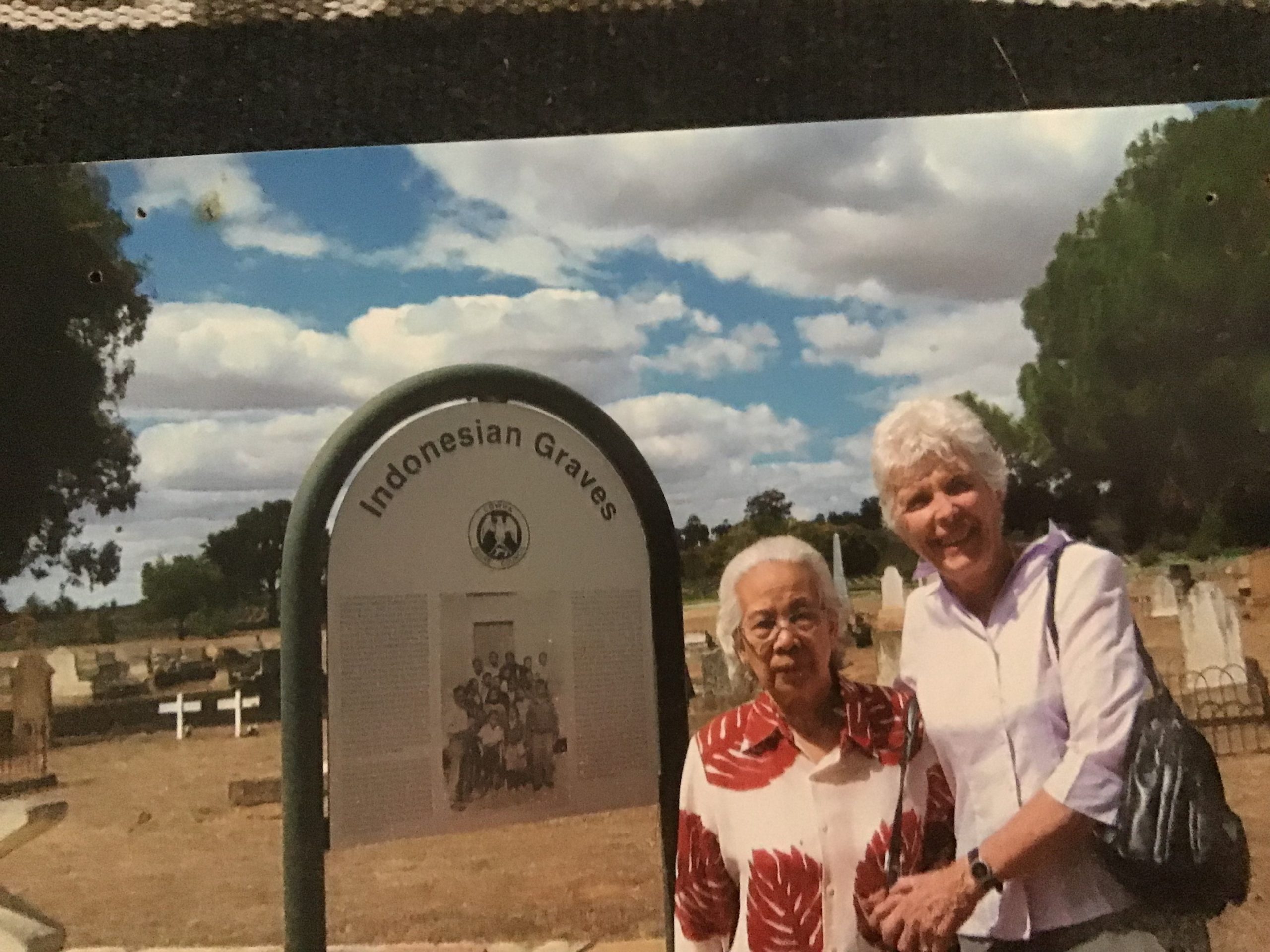
By Jan Lingard, author of “Refugees and Rebels”
During the extensive research I carried out for my book ‘Refugees and Rebels: Indonesian Exiles in Wartime Australia’ I discovered that a number of Indonesians had been interned in the Cowra P.O.W camp in 1943, and that some of them, including women and children, had died there. The first group were striking merchant seamen on Dutch ships, and the second group comprised Dutch political prisoners and their families, brought to Australia from the notorious jungle prison at Boven Digul in then Dutch New Guinea. These people were nationalists, incarcerated by the Dutch for their efforts to gain independence from their colonial masters.
After more research I found a record of those who had died and the dates of their deaths.
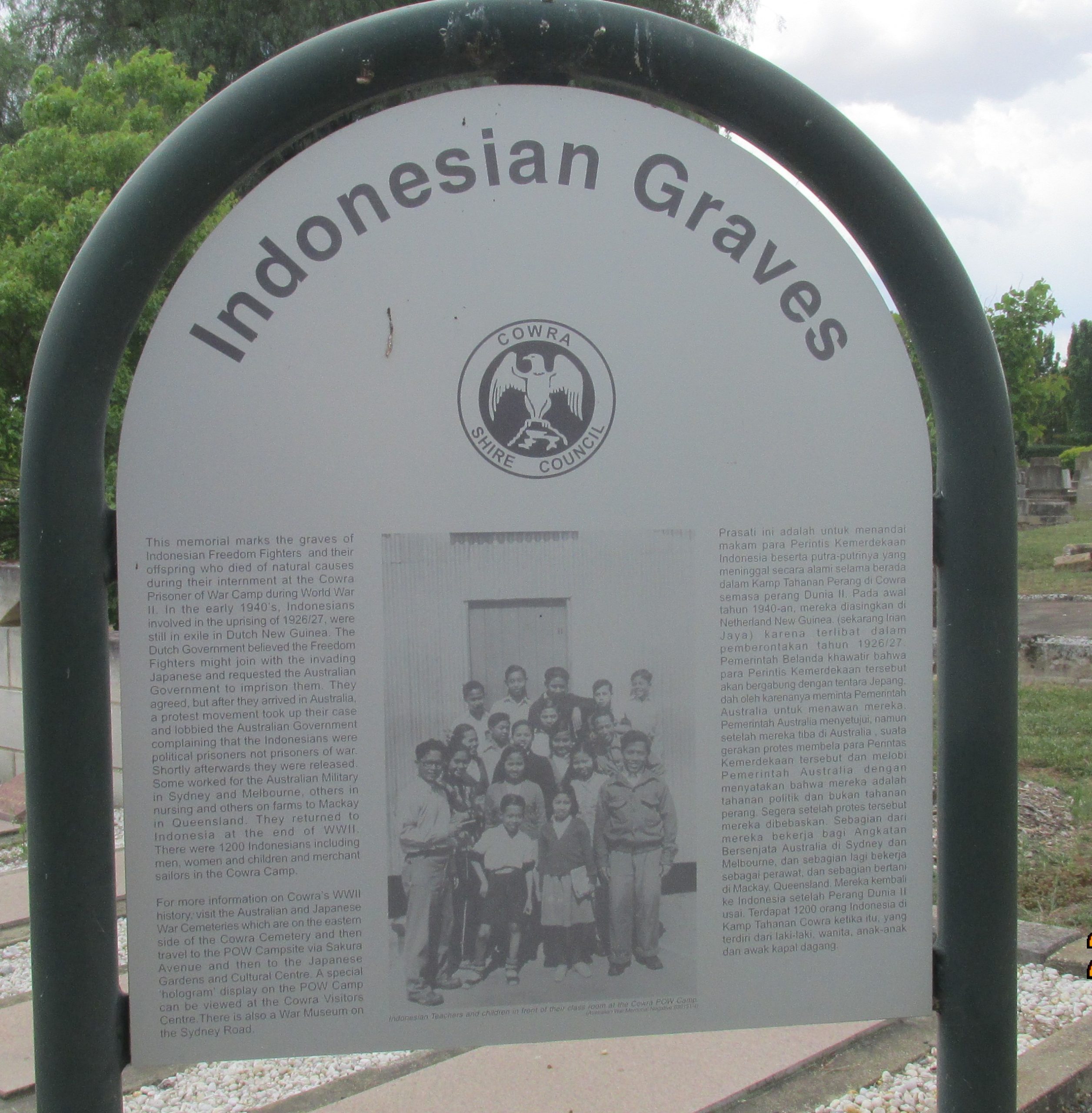
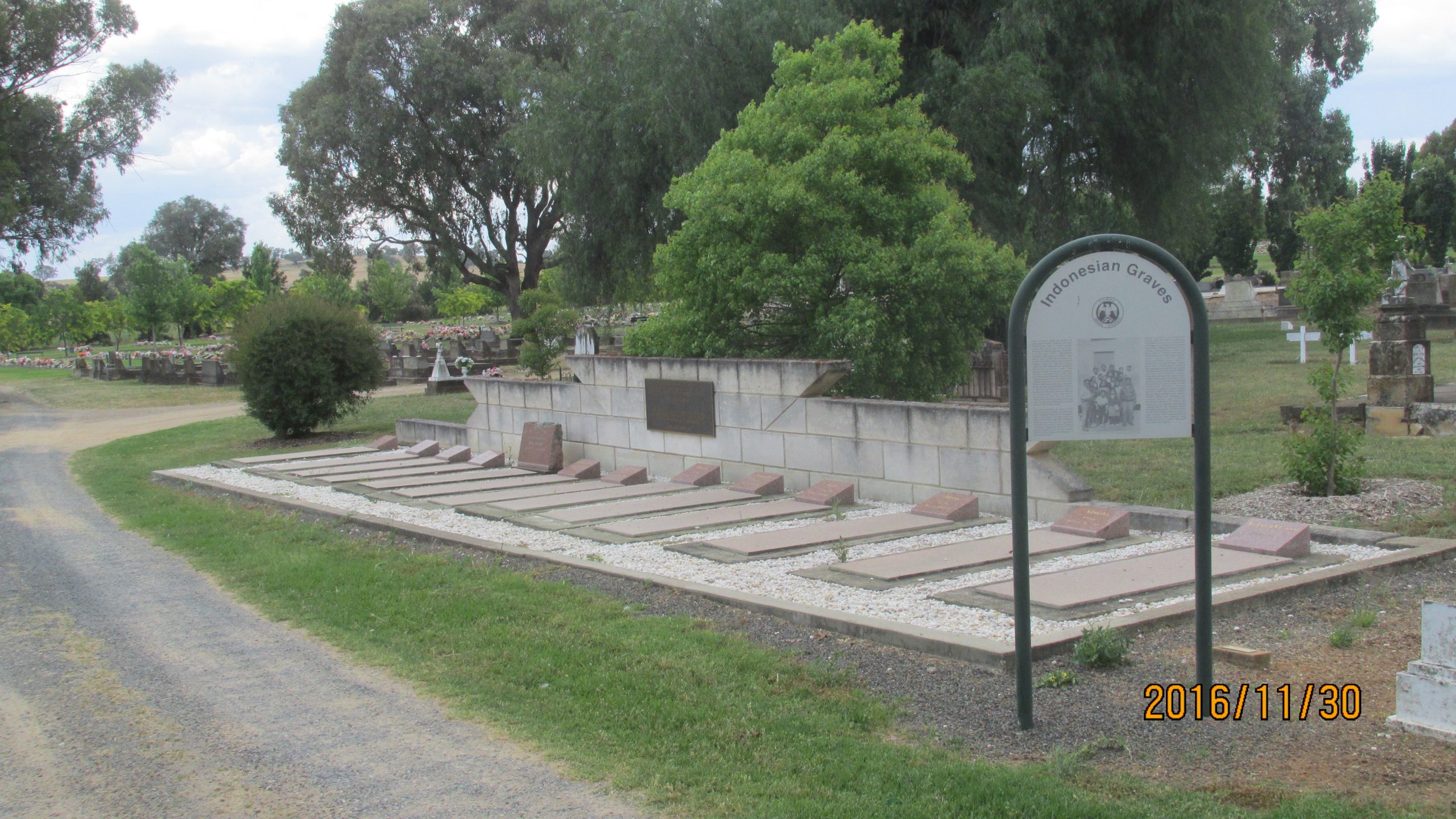
I contacted Cowra Council to ask if anyone knew of Indonesian burials in the local cemetery and then went to Cowra to look for the graves. With the assistance of Graham Apthorpe from the Council, I located the graves, identifiable at that stage by the only grave with a headstone which bore the name ‘Salamah’, whom I knew to be one of the women who died. The graves were just slabs of discoloured concrete, side by side, marked by rotted wooden posts which may have had names on them back in the 1940s when they were erected.
I was anxious to identify who was buried where, and in the Cowra courthouse archives I found records of the deaths, including the dates of burials, which were in chronological order. I wondered why one grave had a proper headstone so I visited the local stonemason and learned that after the war, Salamah’s son had visited Cowra to have that headstone erected on his mother’s grave. I’m glad he did because by knowing the date of her burial, I was able to identify who had been buried in the other graves.
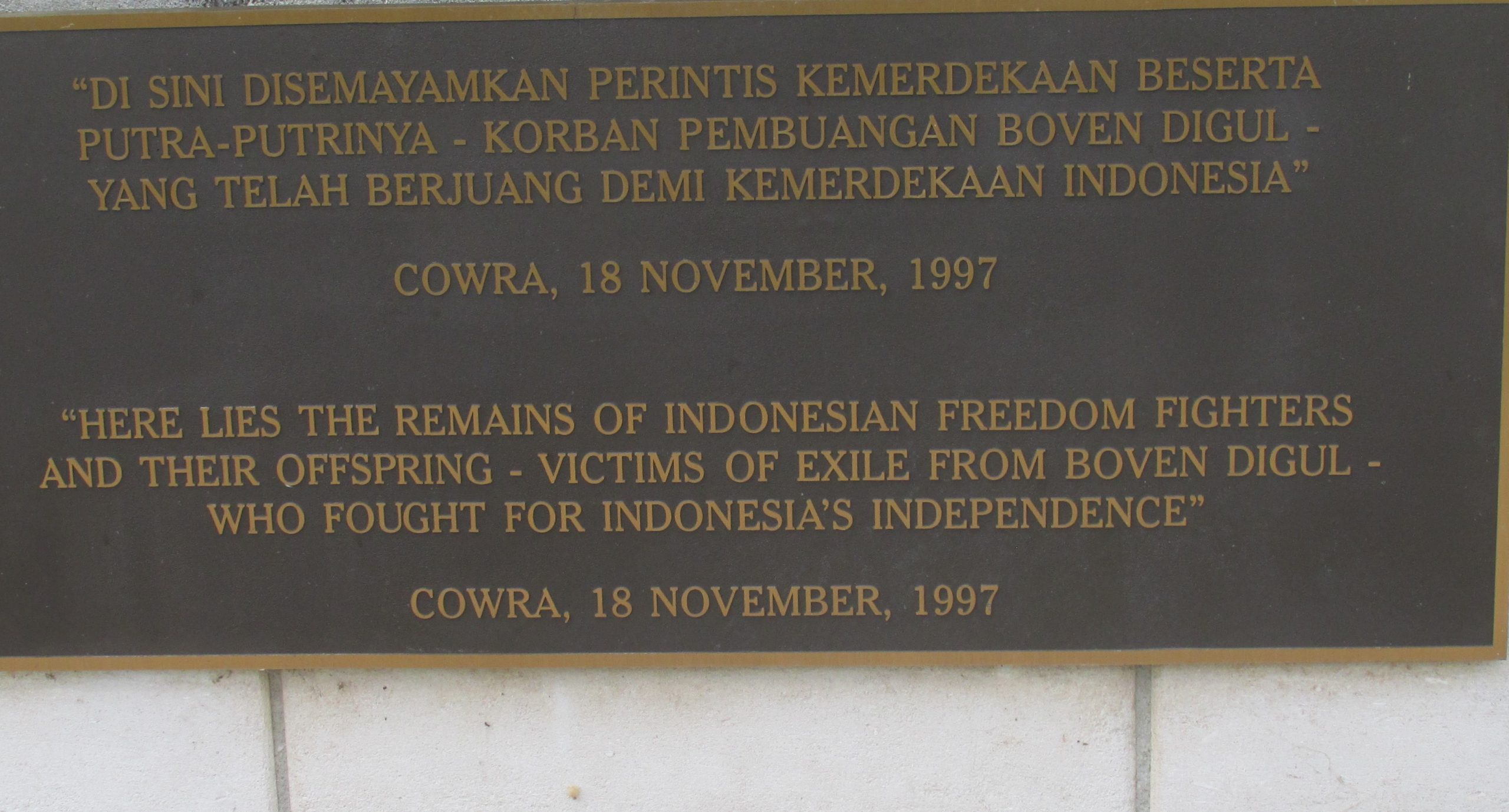
I felt that this was an important find and visited the Indonesian Ambassador of the time, Bapak Wiryono, to inform him of my discovery and discuss the possibility of the graves being restored as befitted Indonesian freedom fighters. Wiryono was able to persuade the Indonesian Government to do this, and with the co-operation of the Cowra Council in 1947, the graves were restored to the impressive state we see today. And those who died are no longer anonymous.